Moissanite and stones
Moissanite vs diamond: what moissanite is, and how it compares with lab grown diamond and CZ
Short answer
Moissanite is silicon carbide, a gemstone grown in a lab; diamond, mined or lab-grown, is carbon. Moissanite is 9.25 on the Mohs scale against 10 for diamond, shows more fire and is lighter, so it is sold by diamond-equivalent weight (DEW). A thermal diamond tester reads it as diamond; an electrical tester tells them apart.
On this page 9 sections
| Property | Moissanite | Diamond | Lab-grown diamond | Cubic zirconia (CZ) |
|---|---|---|---|---|
| Material | Silicon carbide, lab-grown | Carbon, mined | Carbon, grown by CVD or HPHT | Zirconium dioxide, lab-made |
| Hardness (Mohs) | 9.25 | 10 | 10 | 8–8.5 |
| Refractive index | 2.65–2.69 | 2.42 | 2.42 | 2.15–2.18 |
| Dispersion (fire) | 0.104 | 0.044 | 0.044 | 0.058–0.066 |
| Density, g/cm³ | 3.21 | 3.52 | 3.52 | 5.6–6.0 |
| Refraction | Double | Single | Single | Single |
| Thermal diamond tester | Reads as diamond | Diamond | Diamond | Not diamond |
| Electrical (moissanite) tester | Moissanite | Not moissanite | Not moissanite | Not moissanite |
| Sold in the US as | Moissanite, carat as DEW | Diamond | Lab-grown diamond | Cubic zirconia |
What is moissanite?
Moissanite is silicon carbide (SiC), a gemstone grown in a lab. It is 9.25 on the Mohs scale, harder than sapphire and second among jewelry stones only to diamond, and it shows more fire than diamond.
Henri Moissan found the first natural grains in 1893, in the Canyon Diablo meteorite crater in Arizona. Natural moissanite is too rare and too small to cut, so every moissanite in jewelry is grown in a lab. Its structure is hexagonal, which makes it doubly refractive: under a 10× loupe, facet edges seen at an angle look doubled. Colorless grades run D to F on the diamond color scale; grades and GRA cards are explained in moissanite grading and GRA.
Moissanite vs diamond
Moissanite and diamond look alike face up but are different materials: moissanite is silicon carbide, diamond is carbon. Diamond is harder (10 against 9.25); moissanite has a higher refractive index and more than twice the dispersion, so it flashes more rainbow color, and it is lighter for its size.
- Look. At arm's length most people cannot tell them apart. In sunlight moissanite shows more colored fire; diamond shows more white light. Stones of 2 ct and more can show a faint gray or green tint under warm light.
- Weight. A round moissanite of 6.5 mm weighs less than a 1 ct diamond of the same size, so it is sold as 1 ct DEW (diamond-equivalent weight). Size chart: moissanite mm to carat.
- Wear. Both keep their polish for decades of daily wear. In a sterling silver setting, the metal wears long before the stone.
- Name. US rules reserve the word "diamond" for diamond; moissanite is sold as moissanite or lab-created moissanite (16 CFR 23.12).
Moissanite vs lab grown diamond
A lab-grown diamond is a real diamond: carbon, with the same hardness, refractive index and fire as a mined diamond, grown by CVD or HPHT and graded by gem labs. Moissanite is a different stone, silicon carbide, with more fire and slightly lower hardness, and it usually costs less per carat than a lab-grown diamond.
In the US a lab-grown diamond must carry a qualifier such as "lab-grown" or "laboratory-created"; moissanite may not be called a diamond, lab diamond or lab-grown diamond at all.
Moissanite vs cubic zirconia
Moissanite is harder (9.25 against 8–8.5), has a higher refractive index (2.65 against 2.15) and keeps sharp facet edges for years; cubic zirconia (CZ) is heavier, scratches and dulls with daily wear, and costs far less. Many shops stock CZ for fashion lines and moissanite for gifts and bridal, often in the same setting. CZ styles: wholesale cubic zirconia jewelry.
Does moissanite pass a diamond tester?
Yes, on a thermal diamond tester: moissanite conducts heat almost as well as diamond, so a heat probe reads it as diamond. A moissanite tester or a multi-tester, which also measures electrical conductivity, tells them apart, and so does a loupe: moissanite shows doubled facet edges.
Boron-bearing (type IIb) diamonds, mined or lab-grown, also conduct electricity, so a multi-tester can flag one as moissanite; a gem lab settles it. Tell your customers the stone is moissanite and tests as moissanite on a multi-tester: that line heads off "is this a fake diamond?" disputes.
Does moissanite get cloudy?
No. Moissanite does not turn cloudy, yellow or dull with age; at 9.25 on the Mohs scale it keeps its polish. A cloudy look is a film of skin oil, lotion or soap on the stone, which warm soapy water and a soft brush remove. Cubic zirconia, by contrast, scratches and dulls over years of wear.
Is moissanite real?
Yes. Moissanite is a real gemstone, silicon carbide grown in a lab, not glass and not a coating, and GRA moissanite is real moissanite with a grading card. It is not a real diamond, and in the US it may not be sold as one: call it moissanite or lab-created moissanite, with its carat as DEW.
Moissanite in 925 sterling silver
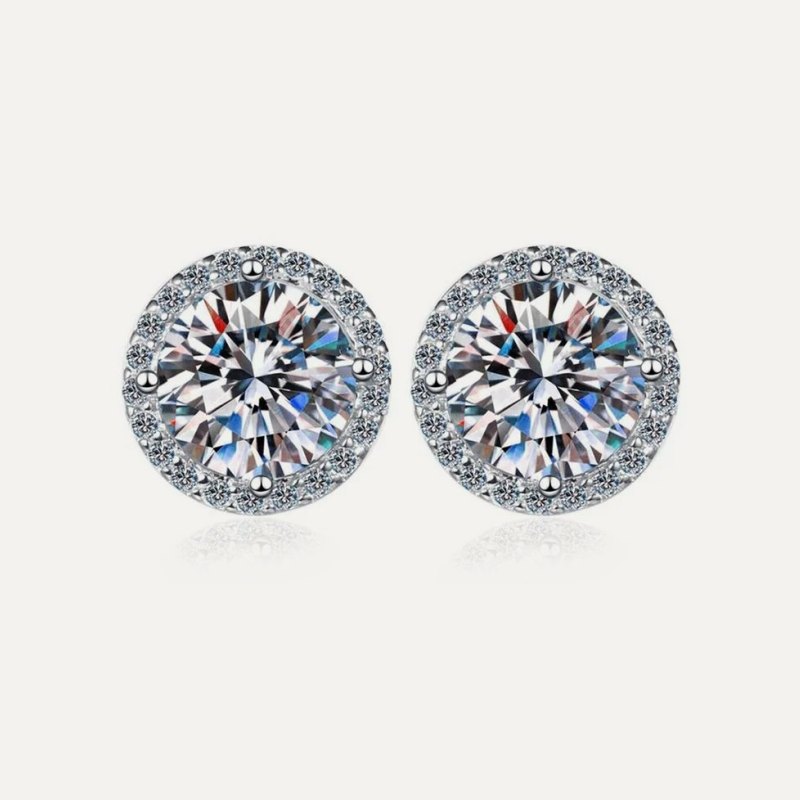
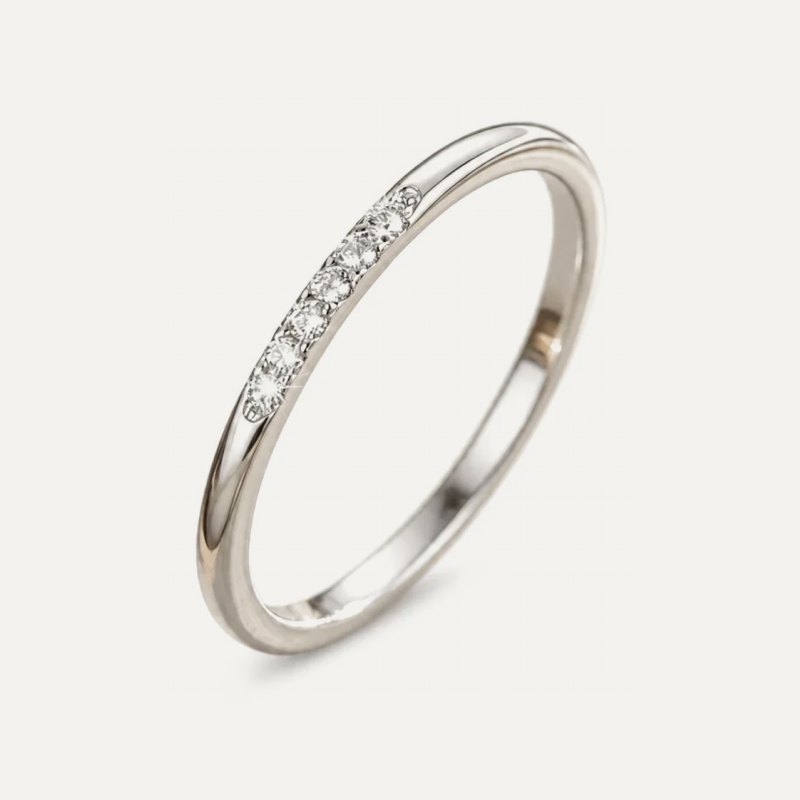
We set moissanite in 925 sterling silver in our Guangzhou factory, and every stone of 0.3 ct DEW or more ships with its own GRA card. Shop wholesale moissanite jewelry, or check a card on GRA certificate lookup.
Sources
- US Federal Trade Commission, 16 CFR 23.12, definition and misuse of the word "diamond", and the qualifiers for laboratory-created diamonds.
- Moissanite, Wikipedia, Synthetic diamond, Wikipedia and Cubic zirconia, Wikipedia: discovery, hardness, refractive index, dispersion, density and testing.
Questions buyers ask
What is moissanite?
Moissanite is silicon carbide, a gemstone grown in a lab. It is 9.25 on the Mohs scale, second among jewelry stones only to diamond, and shows more fire than diamond.
Henri Moissan found the first natural grains in 1893, in a meteorite crater in Arizona; natural moissanite is too rare to cut, so all jewelry moissanite is lab-grown. Our moissanite is set in 925 sterling silver: wholesale moissanite jewelry.
What is the difference between moissanite and diamond?
Moissanite is silicon carbide and diamond is carbon. Diamond is harder (10 against 9.25 on the Mohs scale); moissanite shows more rainbow fire, is doubly refractive and is lighter, so it is sold by diamond-equivalent weight (DEW).
Face up and at arm's length most people cannot tell them apart; in sunlight moissanite flashes more color. Side by side: moissanite vs diamond.
Moissanite or lab-grown diamond: what is the difference?
A lab-grown diamond is a real diamond, carbon with the same hardness and fire as a mined one; moissanite is a different stone, silicon carbide, with more fire, slightly lower hardness and a lower price per carat.
In the US a lab-grown diamond must be sold with a qualifier such as "lab-grown"; moissanite may not be called a diamond at all. See moissanite vs lab grown diamond.
Is moissanite better than cubic zirconia?
For pieces worn every day, yes: moissanite is harder (9.25 against 8–8.5 on the Mohs scale) and keeps sharp facet edges, while cubic zirconia (CZ) scratches and dulls with wear. CZ costs much less.
Many shops stock CZ for fashion lines and moissanite for gifts and bridal: wholesale cubic zirconia jewelry.
Is moissanite real?
Yes. Moissanite is a real gemstone, silicon carbide grown in a lab, not glass and not a coating. It is not a real diamond, and in the US it may not be sold as one.
Sell it as moissanite or lab-created moissanite with its carat as DEW. Stones of 0.3 ct DEW or more from 925hi ship with a GRA card: GRA certificate lookup.
More answers in the wholesale FAQ.